Seasonal Monitoring Guide for Emerald Ash Borer
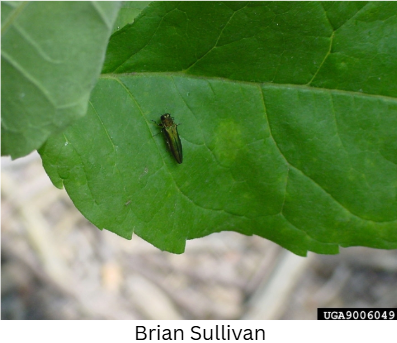
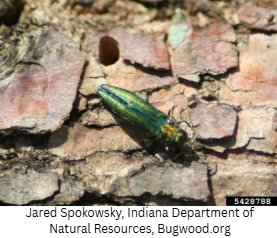
Monitoring at the right time, June through August, helps focus our monitoring efforts, improving efficiency and increasing the chances of early detection for a rapid response.
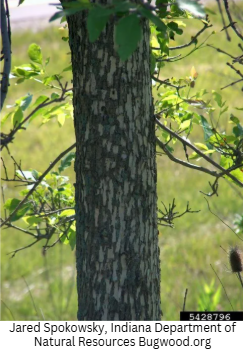
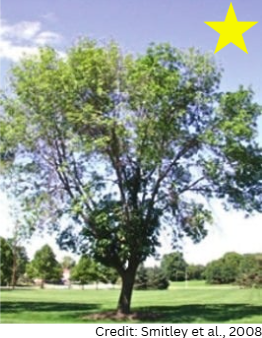
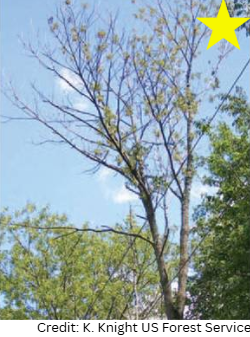
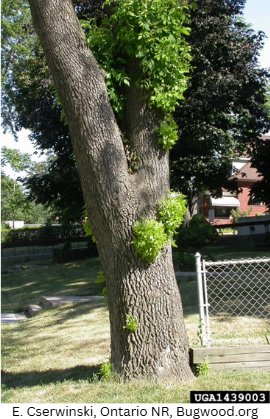
Ash tree species are one of the last tree species to leaf out in spring. Depending on how consistently warm spring temperatures are, if they have not produced leaves by early June, it may be a symptom of stress.
Monitoring for tree health is an important part of the iNaturalist project.
Advances in early detection of Emerald Ash Borer
Predictions of when emerald ash borer may establish in jurisdictions has the potential to lessen the dramatic impact, witnessed 20 years earlier, on future ash trees in cities across Alberta. By the time EAB had established itself in 2002, it was too late to contain its spread. This led to millions of trees being lost.
Intensive research and field work has led to the creation of predictive phenology and climate models that can provide ‘forecasts’ of when EAB may be most active and easier to detect. The timing of insect life cycles combined with climate ‘calendars’ helps provide a time-window for when they will be most active.
Directory of selected Degree-Day, establishment Risk, and Pest event maps, DDRP. www.uspest.org
When populations are too low to detect, the development of green and dark purple sticky prism traps can help.
With attached patches of synthetically reproduced female pheromones to lure male beetles, they are easily captured and detected when technicians collect the traps throughout the summer. Another trap design, without use of the sticky residue applied to the prism traps, is a funnel trap designed to prevent escape.
You may see these traps setup high in ash tree canopies in cities across Alberta.