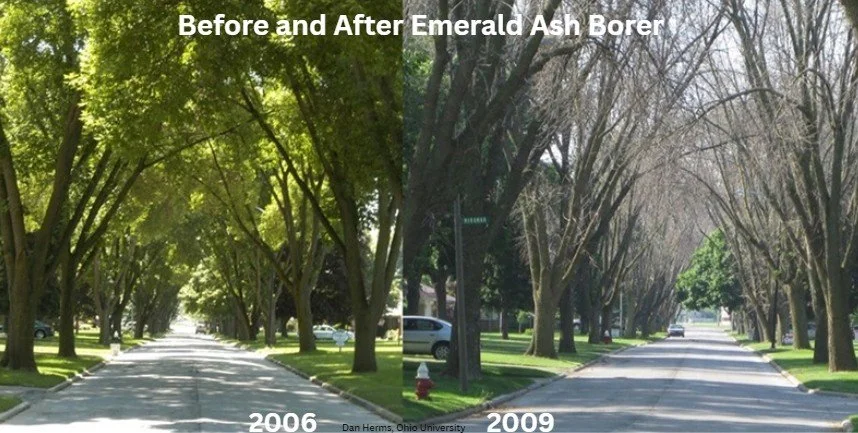
emerald ash borer (EAB), Agrilus planipennis
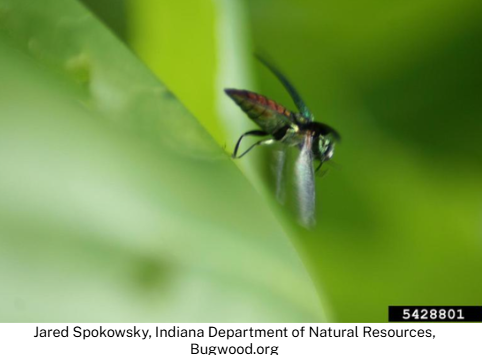
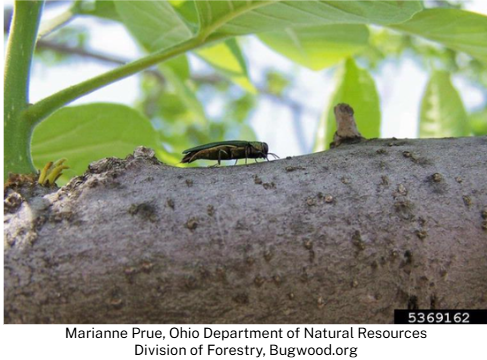
The emerald ash borer (EAB) attacks and kills all ash trees

Hundreds of thousands of ash trees in Alberta are vulnerable. The environmental, social, and economic impacts of EAB in Alberta are considerable
EAB has not been detected in Alberta yet
People in their communities monitoring and sharing their observations exponentially increases Alberta’s capacity for early detection and a rapid management response of this invasive wood-boring species
EAB Highlights
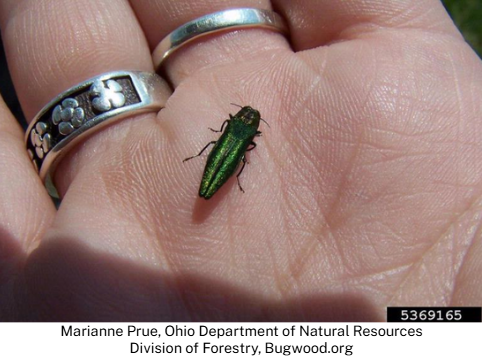
EAB is an invasive and highly destructive wood-boring beetle that kills only and all ash tree species. (Fraxinus spp.)

Was first detected in eastern United States and Canada in 2002, spreading westward. EAB has killed tens of millions of ash trees across North America.
Native to northeastern regions of Asia including eastern Russia. Thought to have been accidentally introduced to North America from infested wood packaging materials in overseas shipping containers.
A mature adult beetle is roughly the size of a grain of rice, measuring only 8.5-14 mm long and 3-3.5 mm wide.
Adult beetles can fly up to 10 km. The emerald ash borer continues spreading into western Canada, establishing in new communities with recent detection in British Columbia in 2024.
Tree death is caused by larvae feeding on inner tree tissues, interrupting the flow of essential water and nutrients. Once infestation thresholds are reach, tree mortality is assured within 1-3 years.
EAB spreads quickly when people transport infested firewood from one location to another. ‘Burn it where you buy it!’ remains a key campaign message across North America.